Showing posts with label book stuff. Show all posts

Friday, August 07, 2015

Linear time

Having to live in linear time -- always unable to change the past -- is both the Classic Human Dilemma, and lousy.

I know it's exactly what I need to do.

I know that if I didn't have to live with consequences, I'd never gain any wisdom.

I know it's no harder for me than it is for anybody else. Still, it would be nice for life to come with just a couple of do-over tickets.

Or one.  I'd take one.

But it might not matter even if I could.

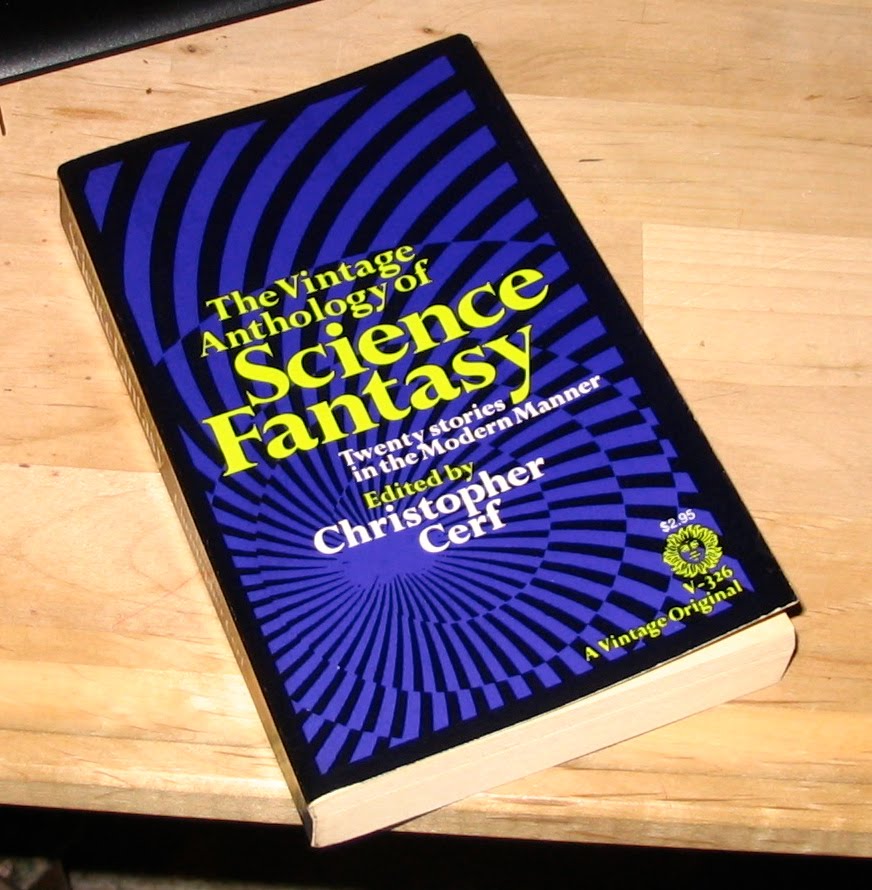
Anybody who's ever seen It's a Wonderful Life has encountered the concept of alternate time lines, but what got my brain working on it was this book, which I bought when I was about 17, at the Intimate Bookshop in Charlotte, NC. Southpark Mall, specifically.  It was a slightly life-changing experience.

Or, one of the stories in it was. The title is "Random Quest," by John Wyndham.  It's about alternate universes. Specifically, it's about a man who temporarily trades places with the version of himself who is living out a somewhat different life in a different time-line.

This is going to get confusing, because the story contains these two "Colin Traffords" so I will call ours "Traff One".  He's the only one we meet and know, the one who tells the story.  He lives here in our very own universe, which I'll call Universe One. He works in a physics lab and gets knocked out when the test of a big new reactor goes rather badly.

He wakes up ... somewhere else. In a world both familiar and not. Some places and people are the same.  Others are different.

There's also a Colin Trafford in this alternate Universe. Traff Two, Universe Two.  He was hit by a Universe Two bus at the same moment that Traff One, here in our world, was knocked out during the reactor test.

They have swapped consciousnesses.  Traff One's consciousness -- his memories, his knowledge, his self -- is now occupying Traff Two, whose own "consciousness" now, presumably, occupies Traff One's comatose body back here in our familiar world.

So here's Traff One's "awareness," "consciousness," whatever you want to call it, in Traff Two's universe.  He finds it quite navigable but...odd.  Technology is different, less advanced.  This is the 1950's but he finds radio, but no TV.  AM but no FM.   Cars look funny.  Fashions look funny.

The big thing is that, there in Universe Two, World War II never happened.

So. Because there was no WWII in Universe Two, Traff-Two didn't go to war and therefore did not follow his war work into the field of physics. He became a novelist instead.

He also became a nasty, unpleasant sort of chap.

He also found this really great woman and married her. But he's slowly destroying the marriage.

You can guess where that's going.

Back here in Universe One, Traff-One's comatose head regains consciousness after 3 weeks. That means Traff One is zapped back here into his own world and his own time-line.

But Traff One is NOT happy to be back.  Not without Her.   Perfect Woman, whom he's now obsessed with finding.  After all, Trafford had managed to determine that both time-lines were alike until he was about 8 years old, so Miss Perfect likely exists here, but had a different life from that point, just as both Colin Traffords did.  He sets out in search of her.  Thus the "Quest" of the title.

As a teenager, I of course sighed over this "meant to be" love story.

I also was even more impressed by the fact that the exact date of my birth was mentioned. This is when Traff One first wakes up in Time-line Two, and wanders around trying to figure out what has happened.  He picks up a magazine dated January 22, 1954.

This made "Random Quest" the most important short story ever written, in my mind.

Predictably it's been made into movies (Here's part one of a modern BBC version on youtube, in several parts), but they're basically love stories.  They barely explore the uncomfortable questions of what's meant to be, or which history is the Groundhog Day type "right" one we keep stupidly failing at.  Or whether there is a "right" one at all.

The original story gives Traff One, and us, only tantalizing glimpses of these fascinating ideas, entirely aside from the One Perfect Soul Mate thing.   It took me a few years and a few read-throughs, but eventually I saw that the point of the story, made quietly, is that nothing was meant to be.

Or rather, that everything was meant to be, and is out there, being. In one alternate universe or another. Every possibility occurs. Ninth Grade physical science didn't really prep me to talk about theoretical physics, but apparently it gets into ....

Let me just type a "Random Quest" quote in here. Colin Trafford (Traff One) explains:
One was brought up against Einstein and relativity, which, as you know, denies the possibility of determining motion absolutely and consequently leads into the idea of the four-dimensional space-time continuum. ... In other words, although the infinite point which we call a moment in 1954 must occur throughout the continuum, it exists only in relation to each observer, and appears to have similar existence in relation to certain close groups of observers.
Big help, wasn't it?  Yes, that's sarcasm.  Other sci fi pieces speak of alternate universes "splitting off" but that's apparently sort of an inaccurate metaphor.  The theory seems more to say that every possibility is happening and perception of which one is "reality" is matter of where you are standing.

Trafford One can't find the moment of diversion at all.  He can only narrow the date of the split down to a guess that it was when he was around 6-8 years old.  His own life back in Time-line 1, and his alter-ego's in Time-line 2, were the same till about then.

Yet one world is not better than the other.  The story definitely does not advocate the idea that one worked out "the way it's supposed to" and the other didn't. Some people are better off in Time-line 2, while others, including himself, are much more productive and emotionally healthy in Time-line 1.  Wyndham has a lot of fun giving us inexplicable examples of differences that Traff can't track down in his mere three weeks there, so we can't either.

His titular "Quest" to find Miss Perfect allows some wiggle-room for the idea that something can be "wrong" and that the space-time continuum might, once in a long while, hiccup and make a correction.

But the idea that it's a correction is only an interpretation.  It could be just a space-time goof. Wyndham drops some cool little hints about "good" and "bad" events.

So, the death and destruction of World War II didn't happen there in the Alt-Universe? "Good."

Well, maybe. Colin glimpses a newspaper story in which Germany is conducting nuclear research -- testing atomic fission at the time of the story, in 1954. You have to wonder if the world of Universe Two is one in which the war was merely delayed.  Delayed until nukes were in the hands of Germany, and that in Time-line Two, the Axis might about be to unleash a war and win it this time.

Our world just marked the anniversary of the atomic bomb that ended the Pacific war in 1945.

A few years ago we acquired this copy of a map strategizing the Allied Invasion of Japan; the plan they'd have needed to follow if the Hiroshima and Nagasaki bombs had not been dropped:


Lines show the Allies pushing forward across Asia, slowly pushing enemy lines to their hoped-for 1946 mark.

My dad was 17 when he entered the Navy in 1945.  He once told my mother that if the bombing of Japan hadn't occurred, he would probably have been killed somewhere along those fronts so neatly mapped with nice little dotted lines as "1946." Or 1947.  Or...  Pushing across the landscape, as 10s of thousands more died.

So I might owe my existence to the bomb.

"Random Quest" got me thinking at an early age, when my brain wasn't yet petrified, about how the way things happen can't always be identified (with our limited knowledge)  as good or bad. As one of those who's into God stuff, I actually manage to reconcile the two, since I believe that taking the inefficient route to where my Higher Power wants me only makes it harder for me but doesn't stop me from getting there. Likewise, I think Humankind gets off-track but back on.

If the theory works the way it seems to in sci fi stories, then in some alternate time-line, I'm a glaciologist. In another, the bomb never dropped and I was never born.

And in another one, I'm a lawyer. Be afraid. Be very afraid.

But read the original "Random Quest," and let it dance with your mind.

Sunday, August 25, 2013

The Language of Stubbornly Refusing to Let Go


For Christmas 1968, when I was 14, I asked for a bookcase.

I seriously thought it over beforehand.  Never had I asked for anything practical, or non-toy, or non-fashion, or unrelated to any pop boy band .... or anything non-fun.  I wondered if I would regret using up a Christmas wish on an empty piece of furniture.  But I kept wanting it, so I took a deep breath and asked for a bookcase.


This is it.  It still exists.

But as early as the next house, 1972, it moved to the basement where it held jars of home-canned jelly, and where it apparently attained some damage from seepage through the wall.  I'm not sure where it was after that, but it stayed with my parents as a utility shelf as they moved again, and was in the basement next door ten years ago.  But I do NOT think it was in there through Hurricane Hugo.  Hugo would have submerged it up to at least 3 feet in muddy salt water, and the damage looks too superficial for that.  It must have been upstairs.


Beats me.  But I asked for it, back when we moved into this house 10 years ago, and until today, it took the same role, sitting in our basement getting dirty and holding useful whatevers.

I see furniture in this kind of grubby condition in the bulk waste bins at the Recycle Center all the time.  But that always bothers me.  Yeah, it's not so pretty but sheesh, it still works!  It's real, solid, wood, not veneered particle board.  We're talkin' 1968, here.


OK, it needs some repair before it will hold much of a load.  It's disquieting to admit that something I got new is now "old wood" but it has dried and the shelves are pulling in.  The corroded back corner makes it a little unstable.  It will still free-stand but a gentle push tips it.  That's OK, it will go against a wall anyway.

I can't give it up.  Giving things up is something I am not good at.  I keep remembering how I loved it, and I did.  I never for a moment regretted getting a book case for Christmas and adored filling it with cool finds.
 
So I've just given it one heck of a scrubbing, and Larry, who knows how, says we can get those shelves more secure.

I choose to consider myself thrifty and able to appreciate function over cosmetics.  That's much nicer than admitting I absolutely hate to let go of anything.

Sunday, May 05, 2013

Miles to go.


I have no idea why I developed a yen to haul out my art books and flip through them.  I mean, yeah, that's why I bought them, but this particular impulse was strong and sort of demanding.  If it was my Higher Power with some part of The Plan in mind, I still have no idea what or why, but when it's harmless and doable, I've learned to just go with it, and it's fun.
 
So I'm leafing through books I've had for many years, and a couple that I recently bought to replace lost copies from previous life.  After college, I workled at an art museum.  Answering the phone and telling people where the bathrooms were, but still.   They had a museum librarian and I considered what a cool job that might be and took some relevant classes at the univeristy.  And bought books.

The ones in the stack aren't all we've got, just what I've been in the mood for.  17th and 18th Century Art was a textbook I used for an art history course back then, fall 1979.  Not sure how my original copy left my environs, but a replacement was delightfully inexpensive on eBay, and so was 1948's edition of Gardner.   History of Art for Young People, and the National Gallery book were gifts from Dad, and excellent general history with luscious photos.  Vermeer -- gift from Mom --  is one of those creative geniuses who make me believe in the existence of the soul.  His light-bathed little deceptively ordinary house scenes have that luminous quality that seems to reveal something inexplicable. 


Holbein came from around the same time as that 17th-18thc. art history class.  $3.99 on a sale table, circa 1980.

I keep coming back to this portrait.


This is Charles de Solier, Sire de Morette, painted in about 1534.  According to the text, he was France's Ambassador to the English court.  According to the French version of wiki, that was brief.  I find little on him in a cursory search, but it's the portrait that grabs me.

This particular portrait is appreciated by artists (that link goes to the French PlusPedia entry done in Google Translate which explains the slightly odd wording), and deserves that appreciation, but isn't in that "everybody's familiar with it" category.  It wowed me immediately, even in my extremely dull-witted 20's.

Not only does the detail in that calm, smart face amaze me, but it's more than just physically realistic.  I fancy I can tell what he's thinking.  There's some weariness, but he's still in the game.  He's seen a lot and not much will surprise him anymore. The power and money and alliance game shifts but doesn't fundamentally change, and I think he's fairly recently come to an awareness that there will be a day when he just can't care much about the diplomacy game.  According to the link he lived to be wonderfully old for the time, around 30 more years after this portrait.  But the day to hang it up is not here yet.  Bring on the next thing.


Monday, January 28, 2013

My fascinating new afghan and bookcase

Sometimes I try to craft an interesting post title, but other times, I just want to warn people how mundane it will be.  This is one of the latter.


Larry needed a bookcase so I looked at the beat-up white cubes I was using and decided I needed one too.  The new ones came in pieces and were assembled with one screwdriver and much swearing.

There's no discernible rhyme or reason as to what's on it.  This is my dumping ground for books I look at or read over and over because I love where they take me, and some that I want to read -- unread books are EVERYwhere in this house, so that's just a selection -- and some research that's really not underway yet, and the growing Complete Peanuts collection because it outgrew its previous shelf. If you see a classic in this group, it's probably one I have NOT read, with the exception of Robinson Crusoe which I pick up for serenity.

Those white cube-shelves have had a thousand uses over the years since around 1998.  They're getting rather beat but are still useful for utilitarian purposes.  Maybe a closet.  Not sure yet. 

Dismantling the cubes provided Downyflake with a Shelf Cat opportunity.


The striped afghan is the new work-in-progress.  When I finished the previous afghan, my father dropped several hints that he wanted one.  This one is for him and is proceeding as fast as I can manage.  It's smaller, and it's not going to need a whole secondary project of sewing it together, and there is no pattern.  No plan.  Nothing.  I pick up whatever shade of blue looks like it should be next.  So what you see is only (I amaze myself!) 2 weeks' work and I hope to have it done in 6-8 weeks.

And that's the update!

Tuesday, November 06, 2012

40 years of voting


My first election was in 1972.  As a fresh-out-of-the-pen 18-year-old voter, it was a Big Deal.  Today, therefore, marked my 40th voting anniversary.  It's still a Big Deal.

I hit my polling place twice.  When Larry and I voted this morning, I saw a neat-o parking spot labelled "Curbside Voting."

While my dad can walk, and drive, he has some joint and a lot of foot pain, and it takes some effort, and standing in line on a cold, rainy day wasn't an option.  He was planning to forgo voting, till I told him about the curbside service.  So, since they had also changed our polling place to one out in the boondocks,  I went back with him later in the day.

The poll worker came out with this cool little portable voting machine  - they bring it out to your car and hand it in to you through the window.  Totally awesome. 

I'm extolling my great civic virtue and voter-vigilance as a preface to explaining that I am all in.

It's been a good-ish but long day, the election and the nation worry me, and I cannot imagine anything worse than following the returns all evening.

I'm not baffled by the desire to watch it all, if people want to.  I can kind of understand wanting to.  I did it for years.  But I am QUITE baffled by the people who say that it's unpatriotic to not watch. I can't cite where I hear this.  I've heard it several times, it's kind of a "they say," but I gotta disagree.

What knowledge, what positive change, would happen if I kept up with the slow accumulation of electoral votes, that will not happen because I wait for the result?  Am I apathetic to want a quiet, de-stressing evening of a good book, and to find out tomorrow, either who won, or what Constitutional problems have been triggered?

Well, I can only say, I need a break. Tomorrow, we deal with whatever we've come up with.  Tonight, I'm dressing down, making a hot chocolate, and reading Life in a Noble Household, 1641-1700.  It traces the the Russell family in England and how they weathered (or failed to survive) the economy and politics of the era.  It's both fascinating, and a reminder that whenever we live, we can find ourselves in turbulent political times and we just, basically, deal with it!


Sunday, September 09, 2012

[UPDATE] Old post cards, old books


In the process of looking through junk and/or consignment shops (and trying not to bring home dozens more blasted books), I sometimes run into bins full of old post cards.  Mostly, and especially if they're unsorted, I don't try to really systematically search them..... but once in awhile, like a couple days ago, it seems worthwhile to see what treasure is in there.

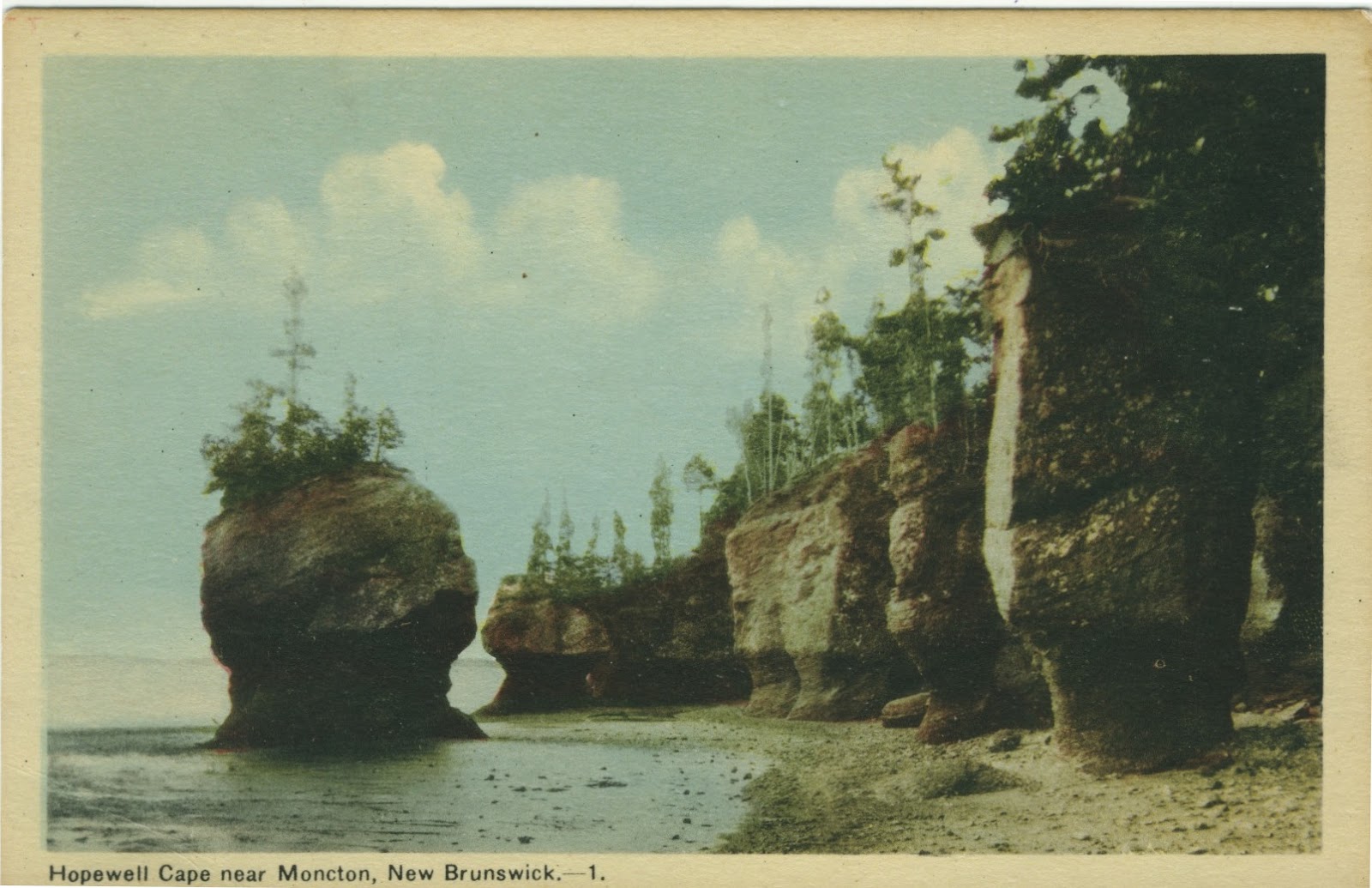
There's no particular reason why one appeals to me except that it's cool -- or, in this case,


....that it's strangely cool-looking and that I have actually heard of the place (thanks to my online acquaintance with ronniecat!).  I always wonder who took a trip and bought it in around 1910, and how the bleep the post card ended up in a basket in a shop in South Carolina.

UPDATE : Thanks to the aforementioned ronniecat, and a link in her comment, I found a beautiful video of this bay and why it's a natural wonder - click here for it!


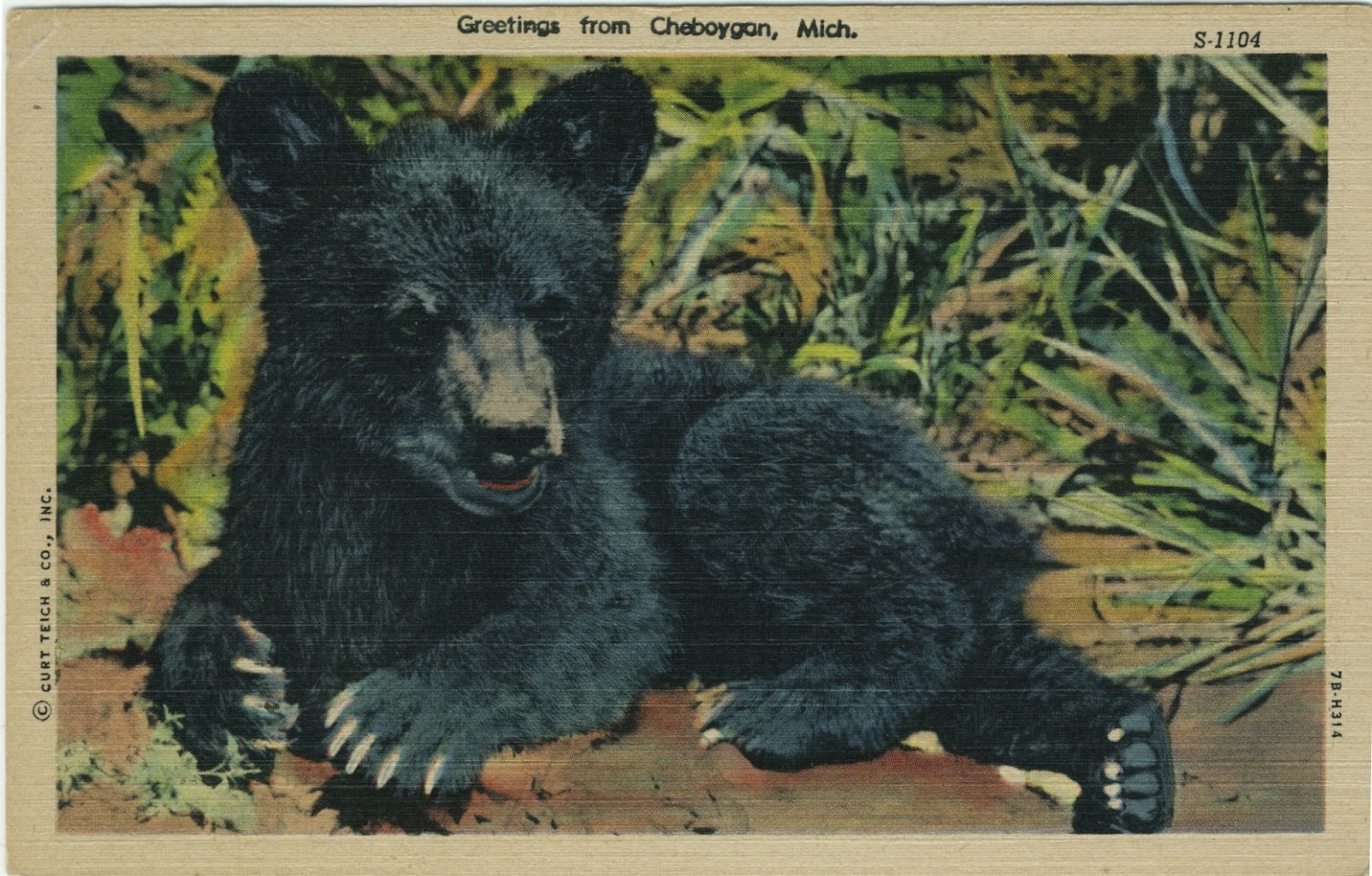
Sometimes, a card is just beautiful :


I have no relationship with Rome, Georgia, but I love the old cars in this street scene:


Dante gets a glimpse of Major Babe, Beatrice:


There was a whole series from the Tower of London.  This is the one that first caught my eye.  I love the choice to photograph the Armoury through this stone entrance :


Lincoln's birthplace:


And this one just had the Awwwww! factor :


The time it took to go through the card basket kept me from getting into worse trouble buying dorky Cold War textbooks.  Like I did last time we went secondhand-shopping.

Man's Story: World History in Its Geographic Setting.  By T. Walter Wallbank.  Published by Scott, Foresman, 1961, and apparently the third edition.

They're cheap enough, since nobody on earth but me wants them, but they weigh a ton and take up an awful lot of space.

 And yet....somebody has to preserve this stuff!  It's part of our history!  Yeah, that's it.

Not to mention that it's full of little groaner cartoons in which a bespectacled character named "Hy Story'  (Get it?)  drops in on various eras and crassly disobeys the Temporal Prime Directive by being in and possibly messing up history:


Sunday, June 05, 2011

Literary Wow on a personal level


I'll be writing about this novel over on the book blog, and may even cannibalize a few paragraphs from this entry, but the personal side of my reaction to it goes here.

If you've ever felt that the segregationist South of the 1950's was a place beyond your comprehension, you might find yourself feeling a little less so after reading this novel. It takes you there. Then again, you have every reason not to want to go there. It is not a nice place.

The title, as much as the cover, attracted me in the bookstore and I discovered right away that it took place within walking distance of the house in which I grew up, and only a handful of years earlier. The family in the book lives a few streets away from the street I lived on. The daughter bikes to Freedom Park, which I did too. It's like, the stage sets of my life: the towering shade trees of the avenues, Ivey's and Montaldo's stores, the Manor Theater. Having a house next to Sugar Creek, and knowing that the springtime creek rising will soak the back of your lot. My (later) high school's marching band plays at local events.

The author is a decade+ older than I am and knew a more rigid version of the segregated world, but not by a huge degree. And only in its laws, not in its social divisions, which had changed very little by my childhood of the 1960s.

Jim Crow laws were banished by the time I had a semi-thoughtful awareness, but, predictably, attitudes changed a LOT more slowly, which kept racial divisions alive and well for years and years. The same old system dies hard and isn't gone yet. Separate neighborhoods, little shared experience that wasn't engineered by school desegregation laws, a distinct us-and-them feeling.

By my era, school integration was beginning, and it was perfectly legal for all races to sit down in any restaurant, or go to any movie theater. We knew the old laws, but we were so young that anything a few years back was "the olden days." Often, a few African Americans were at another table at the restaurant, or at the drug or department store, and we found it normal. They were such a small minority of our daily experience that it reinforced our feeling that they had their own world.

In fact, the author has her teenage character go to a movie at the Manor Theater and walk home, and doesn't mention the unspoken rule there, even in my time - blacks sit in the balcony, whites sit downstairs. That gradually deteriorated and by my teen years, I could sit there, which I'd always craved doing. The theater still operates -- along with the neighborhood, it kind of morphed into an indie film place, now a Regal cinema but still given to "films" more than to movies. The balcony doors are locked, or were every time I visited in the 1990s or early 2000s.

At about age 10 -- and I have no idea what the occasion was -- I was dumbfounded to see a pleasant middle class black neighborhood in Charlotte. It might have been on a multi-den Girl Scout activity of some sort (?), held in various Scout meeting places around town. I have no memory of the occasion other than the discovery that there were African American neighborhoods that looked basically like our white neighborhoods. Someone's pretty, classily dressed mother, obviously on car-pool duty, was ushering her little girl charges into her station wagon, and it was all I could do not to stare.

I knew some desperately poor whites, especially in the farm country my grandparents lived in. I honestly thought that "we," the whites, lived a spectrum of poor-to-rich, based not on race but on various unrelated factors. And that "they," the blacks, were uniformly poor and did low-pay domestic work or manual labor.

That's the society I grew up in, one in which black professionals and middle-class families had an entire other universe that ours rarely saw. It was no leap at all to the realization that this part of town not only existed, but that it must have been existing all along. Well, duh. But it shows you how completely dis-integrated, in every way, southern society was then.

The Dry Grass of August takes a white girl of 13 who lives in a nice house in the Myers Park section of Charlotte, through the racially violent and ugly South of late summer 1954. The racism is a spectrum of its own, semi-literate, violent and deadly in the deep south towns the family drives through on a road trip, but neat and cordial and evil in a different way, in the "decent folks" society of the 50's suburbs.

(Publisher's promo video):


When I write a book-blog entry about it, I think (!) I can be objective about its literary merits, but it's entirely possible that what would have seemed like just a really good book to me otherwise, will take on superpowers of literary importance to me because of the sheer "me me me!" thing that's going on. Not the plot, in which 13-year-old Jubie encountered horrors I never knew existed till I was much older, and not the family dynamics, which have no resemblance to mine, but the outside world that Jubie is reaching into and absorbing. This is where I'm from.

Friday, May 06, 2011

What matters

You'd think Mother's Day would be hard for me this year, but actually, these manufactured holidays never meant much in our family, and that's a real blessing now. Either you appreciate your loved ones on an everyday basis, or you don't, and all the flowery "get sentimental when the Holiday Industry rings the bell" celebrations were, not ignored, but always pretty secondary in our house.

I posted this photo awhile ago, but here it is again because it's so incredibly rich with what mattered in the home my parents made.


As a family we kind of fit in with the local suburban culture, and kind of didn't. My dad was an orthopedic surgeon, and we lived in the part of town and went to the schools that other upper-middle-class professional families lived in and went to. But somehow, we were a little outside it all and I, at the time, never really noticed how. I felt like my family just had a different style. We got a lot of our casual clothes at Kmart, our cars were old models that looked odd to me. I asked once why our cars were shaped funny and that became a source of hilarity for Mom all her life. But they ran. Usually. One time, the steering wheel came off in her hands when she was doing carpool, causing her to lay her head on the empty steering column in despair for a moment before she knocked on a door and borrowed another mom's car.

We had no stereo. Behind the lounge chair, on the floor, you see our record player. It was a big cowhide-suitcase style portable that they had back in med school days when they lived in one room. We. Ran. That. Machine. To. Death. Mom raised me on American musical comedy with it. She often had light opera, Gilbert and Sullivan, or Jeanette McDonald and Nelson Eddy going on it. When my baby brother was big enough to occasionally be fun -- by about 1963 or so -- we'd play something lively and dance around to it in the den. Christmas music whispered on it for hours as Mom wrote her gazillion Christmas cards every year, and we'd crank up the volume for family evenings during the season and on Christmas day.

A lot of what this photo evokes for me is actually outside its borders, because my memory fills in the rest of the scene. Out of the photo, but probably right next to me as I was taking this shot, was our little black and white TV.

Our kitchen was big, sunny, that "heart of the home" they talk about, but had those old metal-rimmed countertops, not high tech formica but covered with figured contact paper laid down by Mom, which would wrinkle and crud up and eventually get pulled off and replaced.

But we did have this awesome refrigerator * with the carousel shelves.
I loved this thing:


I vaguely knew, but never really appreciated all my father and uncle and grandfather did with their lives. Dad and his brother were in orthopedic practice with their father, who started a service in which they took turns serving two clinics up in the mountains treating poor patients. They made money, but not the kind that a lot of other surgeons made.

So my parents put money into what mattered. In the photo, a random stack of books is there within reach, and that's our home in a nutshell. Books about everything. Loads of history, lots of art books, Peanuts, Charles Addams and Helen Hokinson cartoons, science from astronomy to zoology, and a literary smorgasbord that could be mined not just for entertainment but to grow a mind.

At about age 14 or so, triggered by something I can't remember, I got worried about humanity and technology. About how we'd gained abilities that we maybe shouldn't have. I have no idea what it was about, except that I developed a fear that truth could be overcome by falsehood, Wrong could win out over Right because humankind could fake things so diabolically well. To help me work through that, Mom gave me this murder mystery (this very copy, now quite tattered) :


You'll have to read it to find out why!

Also outside the photo's frame, on the upper shelves next to Mom, are the umpteen sets of encyclopedias they bought, all at once, probably making some lucky guy Salesman of the Year in the process. In one swell foop they got us The Book of Popular Science, Lands and Peoples, World Book, and a short-entry general set called Grolier Encyclopedia. Dad had a globe and an unabridged dictionary on a stand in his den. I could write a report on pretty much anything without leaving home.

The holidays with real family-bonding meaning are going to be hard for awhile, but Mom always found such things as Mother's Day sort of nice but silly, and it mostly evokes a feeling in me that I've got things that can never be taken away, that make me the slightly off-center person that I am. All I can do is be so incredulously grateful, and wish everybody could have it.

---

* The refrigerator illustration comes from Atomic Kitchen -- lots of fun, especially for people my age!

Thursday, March 31, 2011

Get really thrilled. I've started a book blog.

I'll wait here while you go find a container for your joy.

......

I said for years that I had no desire to do a separate blog for each topic I write about. About which I write. Stupid prissy syntax rules.

But lately I've thought ... well, maybe just one.

My whole life has revolved around books, bookstores, libraries, buying books, selling them, reviewing them, and I find I want to praise or rant about them fairly often. Thus, a book blog.

I've put it up, after only 3 days of tinkering, and there will be more tinkering, but there it is. AND it has only one new entry. I copied several old entries from this blog to that one, but my regular readers have already read them. The most recent entry is the only new one you'll find, for a few days anyway.

I actually had second thoughts. I mean, how often will I write in a single-topic blog? At this point - heck if I know! And do I really have much interesting to say about books and reading? But it took a lot of cutting and pasting to set it up, and I hate to have wasted the effort.

Problem is, I'm a classic example of someone whose résumé makes her look like she knows a lot about something, when she really doesn't.

For one thing, I was no English major. Or even English minor. I took exactly 2 classes beyond the required Freshman Comp.

One was on Hemingway and Fitzgerald. I actually took that course at the local college in the summer, in hope of using it to meet my freshman comp requirement, but that didn't work. I liked the class though.

The other was a "half-course," brief and for half-credit, on Jane Austen, Thomas Hardy, and Margaret Atwood. Also liked the class, and liked 5 out of 6 of the books, but I could NOT slog through Emma. Emma is actually terrific. I read it last year and adored it, but my barely-formed brain couldn't handle that ThomasHardy-esque sentence structure in 1977.

And that's it for my actual literary education. I've read a gazillion mysteries and an odd assortment of other stuff. Sometimes I don't get around to an everybody's-read-that till late. I read To Kill a Mockingbird when I was 52. Oh, and it was really good. You should read it.

I don't toe party lines. I hate Wuthering Heights. Why it's such a BeeLOVEed CLAssic is beyond me. For once the movie made more sense.

Anyway, I'm a vast sea of ignorance. But I visit other book blogs and sometimes They. Drive. Me. Stark. Raving. Insane. As little as I know, I've realized that there are bloggers out there who read with most of their brain cells asleep. If they book blog, I might as well book blog.

It will include observations on how humanity values and treat books.

Since posting may be sporadic (or may not), to save time for readers who still check for updates instead of getting notifications, I have changed my link-list ...

----> over there on the sidebar ----->

...into that "most recently updated" mode. Blogs will creep down until they're updated, so that you can glance at it as it crawls toward the murky bottom of the list, and skip it till Fresh Deathless Prose shoots it to the top again!

Tuesday, February 01, 2011

Book therapy

No, this book is not therapeutic. Interesting, yes, but uplifting ... no.


This absolutely charmed me in the bookstore. Then I read it.

It's categorized as a graphic novel, though it has pages of straight-out text. Makes it look like a kids' book which it absolutely, emphatically IS NOT. Graphic novels is the best category for it.

It has a totally cool concept. A discontented young woman roams the streets at night and, one night, encounters a mysterious bookmobile that runs only at night.

It's her own personal magic bookmobile, run by her own personal otherworldly librarian. It contains every book she's ever read. Actually, it has everything she's ever read, including letters, cereal boxes, etc. Only what she's already read, nothing she should, or wants to, or would want to read. Just her past.

Is this an awesome idea? What a great way to get in touch with her lost self.

So I think it's going to be a charming story about...what? the healing power of books? revisiting your past and reconnecting with your old dreams and fantasies, and how that can help you get your life unstuck?

No. It's about how avoiding Real Life relationships and achievements by book obsession, like any retreat from reality, can be sick and destructive.

And though charming, it's not, it is food for thought, which is what a book should be. But, while getting the message, one of my thoughts was, Boy would I write a different story if I came up with this idea.

If it were up to me, the heroine, when told she really cannot just leave the regular world and live in the bookmobile, would buy an old RV and start her own, everyday-life Bookmobile.

And if she didn't go that route, still, I'd have the otherworldly librarian suggest it when she expressed her discontent with her life and asked to stay.

She couldn't supernaturally amass the books of someone's life, but she could stock her 'mobile with all the books that she loved, books that helped her and fed her soul through hard times, and she could set out to help unhappy night-wanderers by finding just the right book for them.

This, of course, is my concept, not the author's. Freedom of speech, right to say what she wants to say, yadda yadda, but I like my concept vastly better.

What I would put in such a bookmobile could be a whole post, but here's where I'd start:


The Oxford Book of Eighteenth Century Verse.

I often say that writing a novel doesn't mean I know diddly about literature. It's not modesty, it's the truth, and when I have an impression of some genre or period in literature, I'm likely to be simpleminded in the extreme and to embarrass myself by voicing it, but I'll go out on a limb and say this :

18th century poetry is, like, the Intermission in literary history, where you can take a break between the religious poets and their Journey to Death, and the Romantics and their "My Love is in The Grave" and Life's Fragility, and just go have a Coke and candy bar in the warm light of the lobby.

Sure, some poets of other eras get happy and some get serious here too, but so much of the book is loaded with humor --often deliciously biting humor-- joy, and hope. There's a whole, admittedly "the Titanic is unsinkable," kind of feeling that the amazing discoveries we're making about the cosmos are the beginning of our mastery over pain, wear and decay, injustice and conflict, everything. Life still hurts but there's light ahead; Reason will banish it all.

So far, all that optimism is quite unfulfilled, but mostly, reading this poetry is a joyful interlude.

So I'd certainly have a bunch of copies of this in stock. "Feeling low? Dip into this."

Sunday, December 05, 2010

One hundred Christmases

My great grandmother, Iola, age 8, got this from her oldest sister, Bell, who was 17.

There were 3 sisters. Bell, Iola (the giver and recipient of the first book, above), and Jessamine, who as a small child got nicknamed "Precious" and was called Precious all her life. Iola named her own firstborn -- my grandmother -- Jessamine, and she, aged 7, got this from her namesake aunt.

Again to my grandmother, now age 10, from her own mother.


And another to my grandmother, now age 12, from her mother.


And now we come to my mother, age 1, receiving a gift from Iola who's now a grandmother. Someone in each generation gets the Jessamine nomer. My niece is the 5th generation to have it.


Again to my mom from her grandmother, Iola, whose name has now become "Granny," and is the name I knew her by as well. She's holding a newborn me in this photo, and I do remember her.


To me when I was 9, from my dear godmother.

To me from my mom. Signed by her, on behalf of my beloved stuffed animal menagerie. You'll notice that I was 29 years old. I never outgrew my love for the stuffies, though Hurricane Hugo took most of them.

Books. Best Christmas gift there is.

Monday, November 29, 2010

Bread and Peace

Universal Prayer
Alexander Pope, 1738

Father of All! In every Age,
In every Clime adored,
By Saint, by Savage, and by Sage,
Jehovah, Jove, or Lord!

Thou Great First Cause, least understood:
Who all my Sense confined
To know but this, that Thou art Good,
And that myself am blind;

Yet gave me, in this dark Estate,
To see the Good from Ill;
And binding Nature fast in Fate,
Left free the Human Will.

What Conscience dictates to be done,
Or warns me not to do,
This, teach me more than Hell to shun,
That, more than Heaven pursue.

What Blessings thy free Bounty gives,
Let me not cast away;
For God is paid when Man receives,
T'enjoy is to obey.

Yet not to Earth's contracted Span
Thy Goodness let me bound,
Or think Thee Lord alone of Man,
When thousand Worlds are round:

Let not this weak, unknowing hand
Presume thy bolts to throw,
And deal damnation round the land,
On each I judge thy Foe.

If I am right, thy grace impart,
Still in the right to stay;
If I am wrong, oh teach my heart
To find that better way.

Save me alike from foolish Pride,
Or impious Discontent,
At aught thy Wisdom has denied,
Or aught thy Goodness lent.

Teach me to feel another's Woe,
To hide the Fault I see;
That Mercy I to others show,
That Mercy show to me.

Mean though I am, not wholly so,
Since quickened by thy Breath;
Oh lead me wheresoe'er I go,
Through this day's Life or Death.

This day, be Bread and Peace my Lot;
All else beneath the Sun,
Thou knowst if best bestowed or not,
And let Thy Will be done.

To thee whose Temple is all Space,
Whose Altar Earth, Sea, Skies!
One Chorus let all Being raise!
All Nature's Incense rise!

Monday, August 30, 2010

Books and ribbons

We went to Books-A-Million the other day, like we need more than the umpteen thousand books we already have, but sometimes a little retail therapy is nice. I usually have no interest in the self-help section, but this time I wandered over to it. After lots of scowling at the offerings, I found a book on grieving that looked fairly helpful and intelligent.

Then I put it back. I've found or been given 2 books and a website already. Is there really any reason to get another book? I think that in some way I pictured grief as kind of an assembly-line process, where 4 workers could build a car 4 times as fast as, say, one doing it alone, so 4 sources would make me feel better much faster! Nah, probably not.

I bought The Girl with the Dragon Tattoo, instead. I'm impressed! It's good.


Last year I discovered the mental health benefit of making chains out of shiny, colorful Christmas ribbon. It started as a way to use up tangled messes of old ribbon, but became so much fun that when I ran out, I began scouring gift-wrap displays to buy more. By January, the good colors were gone from local stores, and I began searching online for metallic ribbon dealers. That's where I finally happened on Mystic Alley. I bookmarked the site, but the year was going in other directions and I didn't get around to picking my colors and ordering.

Last week, I realized it would be a happy activity to get back into, so I ordered a box of ribbon. A very big box. Anything worth doing is worth overdoing. Mystic Alley is great to deal with, by the way, fast, accurate, and service-oriented.


That's a standard 12-inch LP album, which I put in the box only for size-reference. It was not obvious how big the box and the contents are, so I used the album to show the size of the ribbon reels. Only then did a cat come helpfully along to pose with the box and make it unnecessary. She couldn't do that before I went to the trouble to hunt through our albums and find it. Certainly not.

It takes as long as it takes, but we're all doing OK.

Monday, July 12, 2010

I should be sincerely sorry to see my neighbor's children devoured by wolves.

- Waldo Lydecker


You can say, and I'm not arguing, that Laura is sentimental melodrama.

Yes, it's full of 1940's social protocol and silly hats. Yes, as all my Twelve-Step Group friends have said many times, the love story is based on disaster bonding, the Lady and the Cop have little else in common, it isn't True Love.

But as filmmaking it's so well-crafted that it mends some of those plausibility seams, and if you don't buy that, it's still sumptuous to watch. The one Oscar it won, out of 5 nominations, was for cinematography, but the art direction was nominated too and the two work together. I don't think there's a single object, moment, or shadow in the movie that wasn't chosen to be there, and chosen well.

I find new things in it every time, which is why yall are being subjected to More Than You Wanna Know about why I love this movie. Complete with not-great screen shots in which I sometimes concealed the dvd-player controls and sometimes forgot.


Here in this flashback, Waldo Lydecker tells the detective how he used his newspaper column to mock the talent of Laura's painter boyfriend. Laura, still unaware that Waldo wasn't just her caring mentor but her stalker, found the column witty and insightful, and dumped the boyfriend.

The screenwriters could have written this scene various ways. Waldo is telling the story, but viewers could have seen Laura delighting in the nasty column all by herself - she'd certainly have told Waldo how great she found it. Or he could have come over to her place to observe her reaction, but sat with her at a breakfast table, with Laura fully dressed.

Instead they brilliantly, creepily, place Waldo there in her bedroom, while she, in negligee, is served breakfast in bed.

The camera pans away from Waldo quickly and focuses on a medium close-up of Laura giggling at the column. Possibly to make trimming out Waldo easy, to allow censoring if the Hays Office balked.

  But Waldo is definitely there and that adds an icky intimacy to their relationship. It's filmed to demonstrate both how un-platonic his feeling for her was, and how clueless she was about that fact. It's wonderful detail that adds dimension to the characters and a quiet clue to the murder motive that the viewers might or might not catch.

Everything in this movie is about detail. Starting with something little, look at Gene Tierney's outfit in the flashback scenes depicting the fateful day Laura Hunt introduced herself to famous critic Waldo Lydecker.


The costume designer has to outfit Laura for a major character development that takes place within a few hours.

This is a just-out-of-high-school Laura Hunt. Pre-success. Pre-sophistication. But smart, tasteful and ambitious, which is why she wants a celebrity to endorse a product and get her ad campaign noticed. In the restaurant scene, where she's vulnerable and naive, she wears a tasteful but unsophisticated suit with a boxy jacket. The jacket has a demure white collar and cuffs, country girl dressing professional.

 Shot down by the acid-tongued Lydecker, she returns to the steno pool at her ad agency.

But he has seen something exceptional in her - or sees a predatory opportunity. Take your pick. I choose both. Anyway, the repentant Lydecker comes to see her that same afternoon, to apologize and give her the product endorsement she wanted. But their roles have flipped. Now he's the uncomfortable one, on her turf, and wanting her approval. Laura has taken off the jacket and her outfit now looks, still unsophisticated and demure, but sleeker, showing innate good taste on a budget, and self-esteem.


More great costuming -- as the plot thickens, we need to suspect several people, including the weak, passive Shelby.  How to make this dork seem menacing...??

The coat. If he just stood there in his business suit with that gun, he'd look goofy, but with the coat over his shoulders like a villain's cape, he looks potentially evil.


The sets .... Oh my. There are three New York apartments shown, all belonging to well-off artsy folks. Each is unique, each reflects the owner. Waldo Lydecker, famous columnist and radio personality, has it all, including a leopard-skin chair in his bathroom, and a collection of masks on the wall that includes, as Detective Mark McPherson notices, one scary one given a central spot.


Laura's aunt is also well-off, but her taste is a little more classic and even staid. Hers is the home of an older woman with money, who wants acceptance by high society but can't entirely extinguish her showgirl origins (That, by the way is in the book - the movie doesn't bother to explain her) or lose her taste for superficial pretty boys who love her money.

Laura, now 5 years into being mentored by Lydecker, has been influenced by his tastes, but still likes sentimental music. And ruffles. The first few times I watched Laura, I thought those ruffled lampshades were just 1940's kitsch, but the sets are dressed with a lot more character insight than that. Laura Hunt is a self-made woman, with sophistication modifying her sentimental tastes, but not eradicating them.

My dvd of the movie has features including commentary by a film professor who mentions something I too noticed, but I think the professor misses the meaning in it. That's the importance of Bessie, the maid.


The film professor says that this, in which Detective Mark McPherson meets Bessie, is an unimportant little scene, but it's not. Bessie is a vital force in the movie and it's a key scene.

The movie is famous for its theme of the detective falling for the dead woman whose murder he's investigating. He doesn't fall for her portrait, whatever other observers say about it. The portrait that the people who loved her draw with words does it.  The painting itself is merely a tangible object he can focus on ,and possibly own.  Bessie loves her employer deeply and blisters Mark's ears with a tirade about Miss Hunt's virtues as a kind, giving, wonderful, true lady, and this is the testimony that tips the scales for McPherson.

Bessie is the method by which the script makes a case for these two possibly having a reality-based love story. Bessie is a hard-knocks Irish woman who hates cops: "I was raised to spit when I saw one." She destroyed evidence to help her beloved Laura keep a good reputation even in death, and she's proud of it.

And McPherson is smart enough to admire Bessie, to let the evidence problem slide, and to see the value of having her as an ally. In that one short scene she drops her cop-hating ways and becomes his biggest fan. Watch her through her few scenes in the rest of the movie. She looks at him as though he made Laura rise from the dead.

Bessie sees that both Mark and Laura are exceptional people, each transcending the world he or she comes from, and it's her devotion to both that symbolizes a solid and reliable bridge between Laura's and Mark's worlds.

The film professor also mentions that Bessie wears the same outfit two days in a row. "It's a one-outfit role" she laughs. I don't think that's it.

Same dress, different day


For a maid who's been presented as uneducated, rather superstitious, and as having a black-and-white view of people, that is a very classy, tasteful dress. Especially for her to come do housekeeping tasks in.

She has actually just come directly from the funeral, according to the book, and apparently they wrote a funeral scene for the film but ditched it. That could explain her nice dress in the first scene, but not the fact that she's wearing it the next day, too.

Nothing says this, but the attention to detail in this movie is so good that I'm pretty dern sure we're meant to see Laura's kind and close relationship with Bessie in that dress. I think Laura gave Bessie the dress, either new or as a cast-off, and that's why Bessie wants to keep wearing it.  Strictly my opinion.

Judith Anderson.  I LOVE Judith Anderson.  You just have to listen as she delivers lines nobody else could speak without sounding like they had a mouthful of graham crackers:


"He knows I know he is just what he is. He also knows that I don't care."

I love Vincent Price, too. Watch him clench his jaw when he's nervous. Watch him always try to make himself look good, so that when he really is telling the truth, and when he's not, he's hard to sort out.

Clifton Webb. Sarcasm at its finest. "Haven't you heard of science's newest triumph; the doorbell?"

This is one case in which the movie is an improvement over the book. The book has a point-of-view problem that filmmaking sort of renders moot. In the novel, several characters narrate, but in each one's segment, the author is forced to tell us things that the current narrator couldn't know, so it kind of shifts into a vague omniscient narrator. I've been told that this is called "author intrusion." They dropped the narrator idea in the film. The camera simply takes us through the investigation.

Just watch it, or watch it again, in a good print. It's a lot of fun.

Wednesday, April 14, 2010

More fun than the Sterling Cooper Christmas party


(PLEASE click any page for a clearer view, and to read the wonderful text!)

More annals of book collecting. As I recall, I bought this because I liked the look of it, especially that nice lettering on the spine. Spines are so often faded out in books this old.

The Business Guide, or Safe Methods of Business. By J. L. Nichols. 1898. J. L. Nichols, publisher, apparently the 4th revision.


"Over a million copies sold." THAT is impressive. This book must have been in offices all over the place. I expected Useful. I expected Businesslike, Dull. Interest tables, templates for deeds, bookkeeping how-to.

I got that, but so much more, along with a wealth of wonderful, lovely and sometimes funny Victorian illustrations.

Every single one of its xiii+420 pages -- even preface, contents and index -- has a header with an edifying saying or quotation. Some familiar, many not. A couple needed both facing pages but most were complete on a single line.


Here's my thing about ancient reference books; I use them. This post started out as an homage to old reference books in general, showing several I keep handy. You'll get that post later. The Business Guide seemed to merit its own entry.

This book has everything. For big and small businesses, for retail and farm management, for buying, selling, measuring and shipping. Chapters and tables on "Laws Governing Public Schools," Responsibility for Runaway Horses," "Mints and Assay Offices," "The Cost of Smoking" (!)


... plus almanac-type fast facts on literacy, religion, prisoners, railroads, of use to the businessman. Much more. It's loaded with goodies. I kept wanting to scan more and more pages for this long entry! Gave in twice.


But wait! There's more! You also get the lowdown on various swindles, explained in detail so you can avoid getting taken! The fact that you now know how to run the scam yourself .... no, I'm sure that all readers would use this information Only For Good.


In scams as in other things, the classics never go out of style. Here's one and the author doesn't show you how the page gets cut - the reader needs to look carefully at this page and to figure it out :


But the author never misses an opportunity to talk about values. Thrift, honesty, hard work, the keys to success.


And last but not least, this page is worthy of becoming a mini-poster: